Alquímico
View all projects


Alquímico Cl. del Colegio #34-24, Centro Histórico, Cartagena de Indias, Colombia Website Photography: Destilando Imágenes
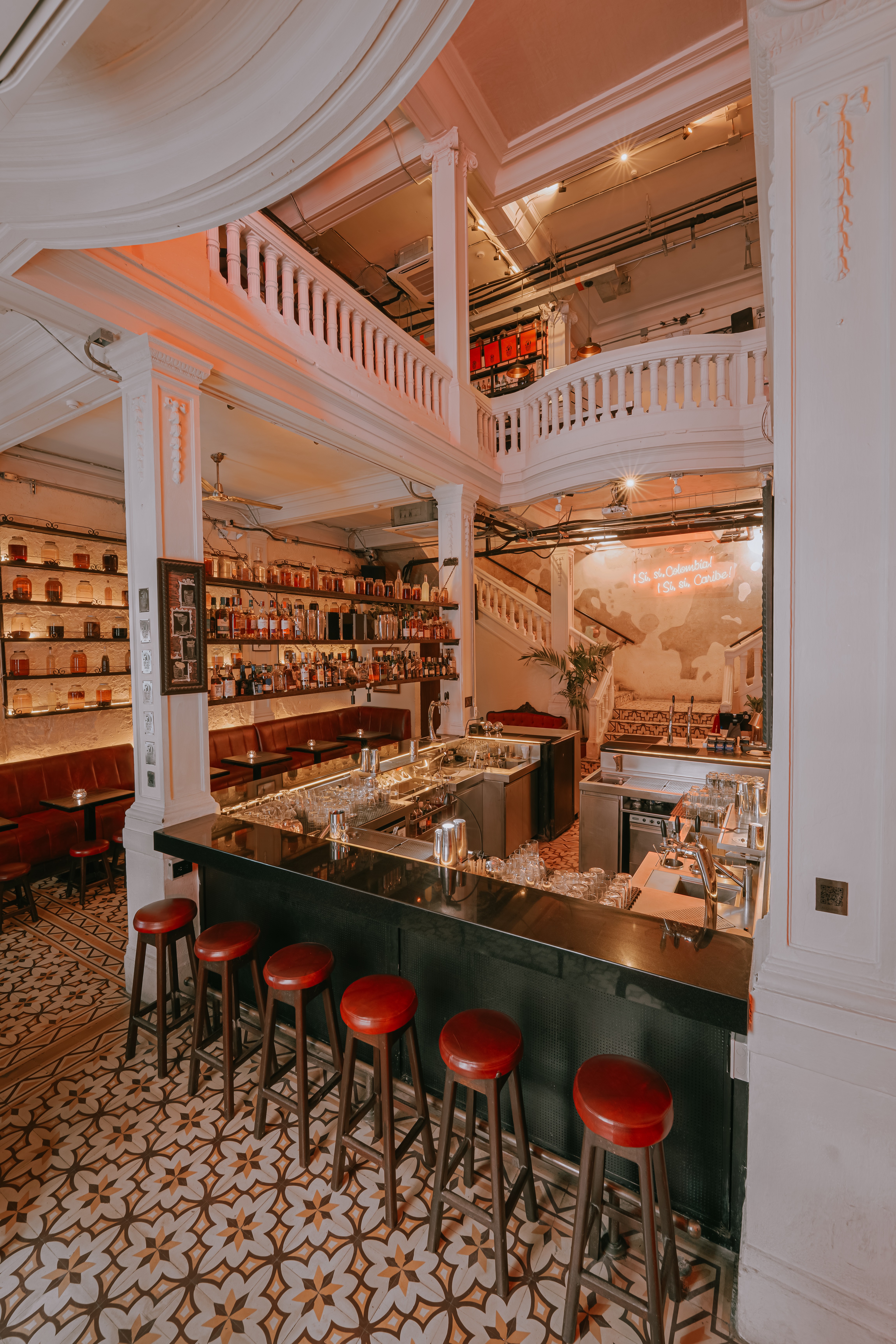
What started on the ground floor of a historic house in Cartagena has grown into three distinct bars, a rooftop, a farm in Colombia’s Coffee Region and a wider network of producers and communities.
Founded by Jean Trinh in 2016, Alquímico has become one of Colombia’s most recognised bars, but its story has developed largely from the inside out. Local ingredients, accessibility and a strong relationship with the people around the bar have been part of the idea from the beginning.
As the venue grew, so did the demands behind each bar. Working closely with Jean Trinh, Miguel Mora and the Alquímico operations team, Behind Bars was brought in to rethink four stations across the existing venue, improving workflow and capacity while working carefully within the architecture already in place.
Inside Alquímico: A Journey Rooted in Colombia
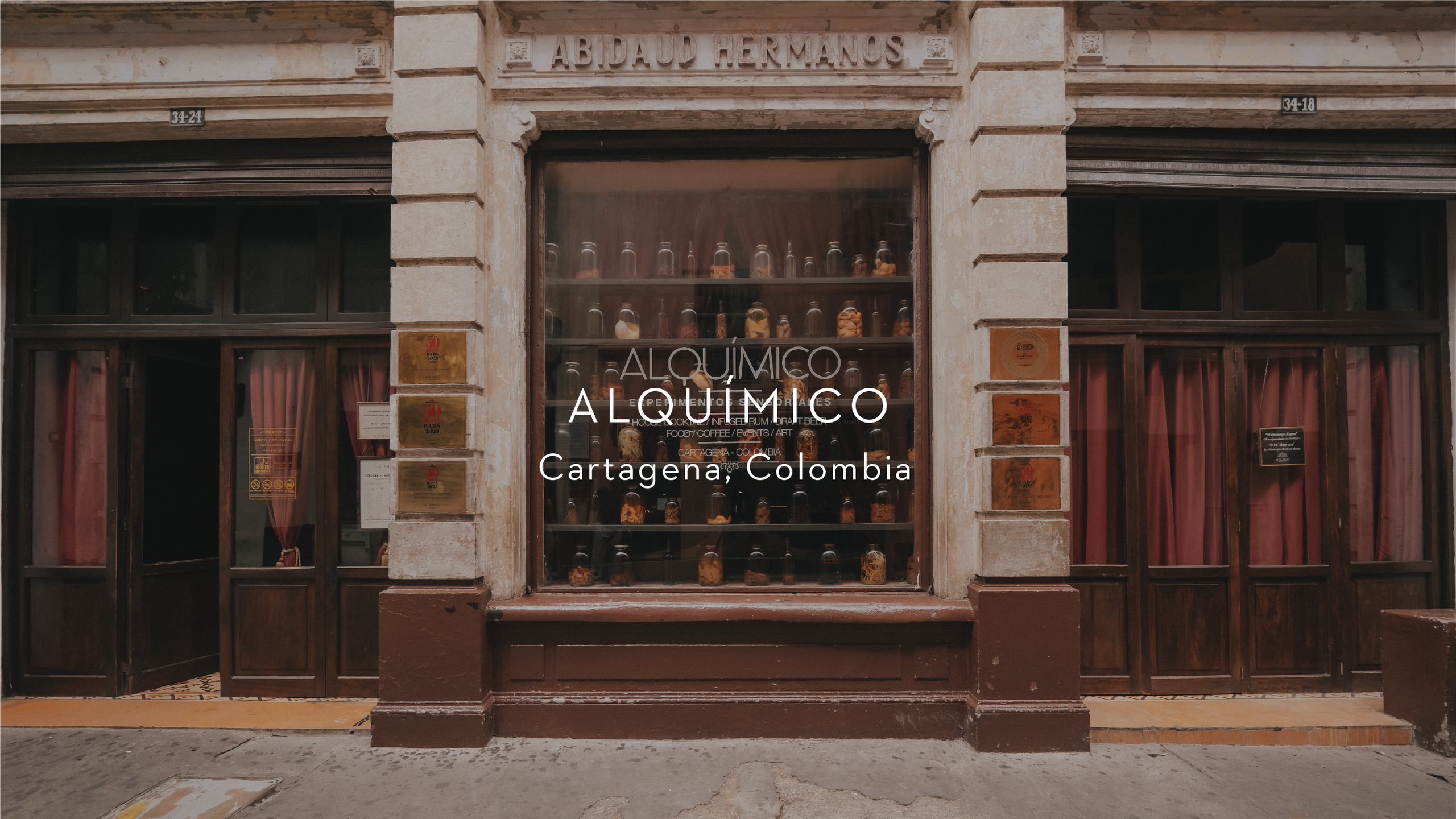
Alquímico occupies a house in Cartagena’s historic centre, designed in the early twentieth century by French architect Gastón Lelarge. Across its three floors, the venue moves through different expressions of the same wider idea: Colombia, its ingredients, its culture and the people behind them.
That philosophy reaches far beyond the building. Alquímico operates its own farm in the Coffee Region and works directly with farmers, producers and community initiatives across Colombia. Its relationship with the Embera Chamí Indigenous Community, for example, supports 20 families who create the handwoven necklaces worn as part of the Alquímico team uniform.
For Jean, that wider sense of hospitality has always been important.
“Hospitality is not only with the guest. It’s between us.”
The physical bar therefore needed to support something that had already developed into a much larger and more demanding operation.
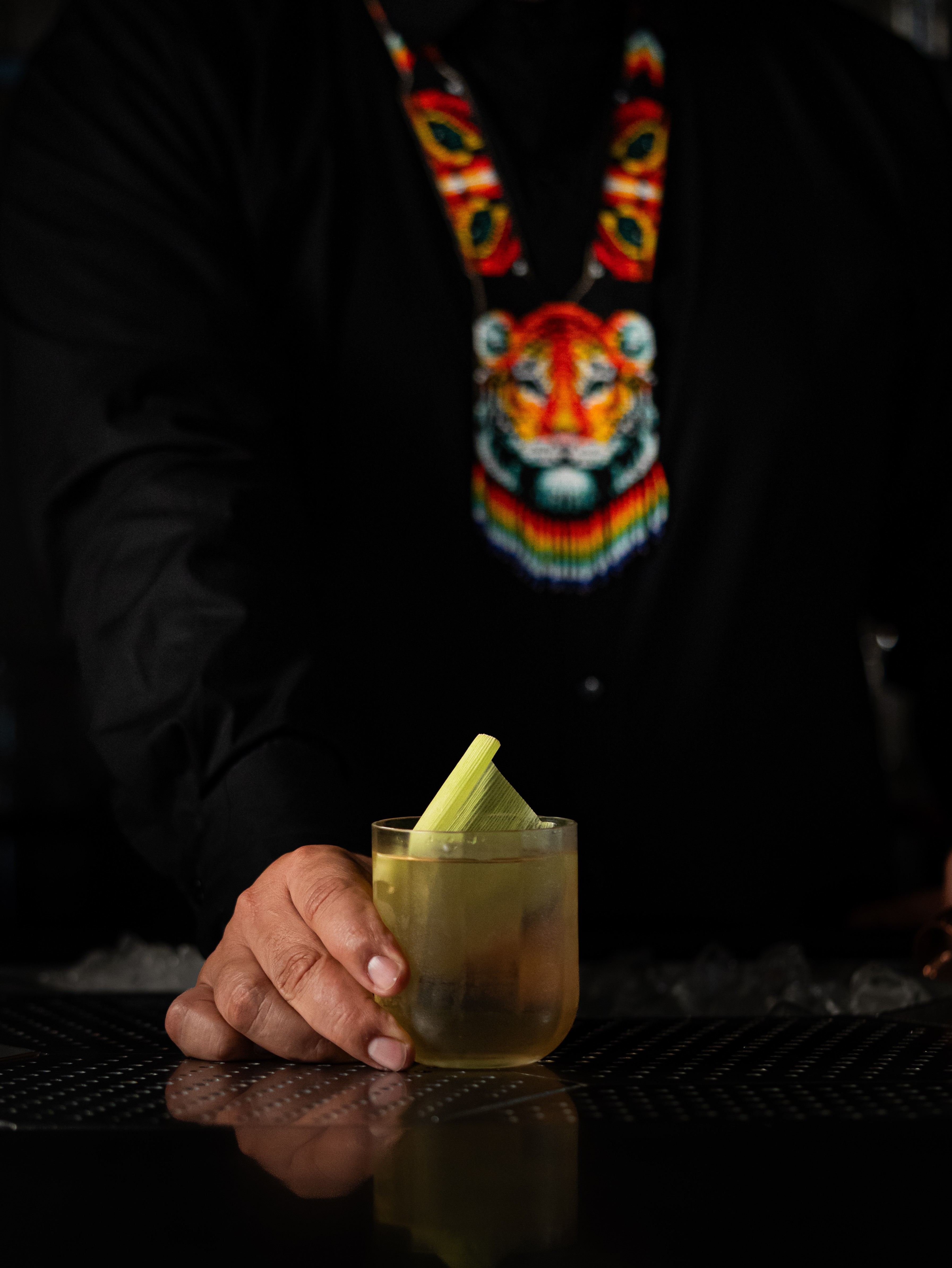
From Colombia into the glass
Local flavour was there from the beginning.
Jean describes the original idea simply: to work with Colombian fruits, spices and spirits while making high-quality cocktails accessible to a local audience. Over time, that approach has evolved into three different beverage concepts across the building.
The first floor is currently home to Comunidad, a menu connected to ASOCOMAN, a farmers’ association in Montes de María. A percentage from each cocktail supports projects including improvements to its production centre, a community school and transportation infrastructure.
On the second floor, Alchemist Classics revisits familiar cocktails through Colombian ingredients and biodiversity. The menu also contributes to the development of a community school for future bartenders and a music initiative supporting more than 150 young people in Cartagena.
The rooftop returns to the farm. From the Farm to the Bar uses organic ingredients grown in the Coffee Region, continuing a project that began when part of the Alquímico team moved there during the pandemic. Today, the program also supports native-tree reforestation and the development of a seedbed to preserve local plant life.
Three floors, each with its own rhythm and program, also meant three very different operational conditions behind the bar.
Retrofitting Alquímico
This was not a blank canvas.
The project was a retrofit, meaning every new station had to work within an established and much-loved venue. Existing architecture, dimensions and service patterns could not simply be moved to accommodate new equipment.
The process developed over roughly six to eight months, with the Alquímico team visiting Behind Bars in Oslo and both teams continuing to work closely between Norway and Colombia.
One of the most valuable parts of the process came directly from the bartenders. Rather than beginning with a predefined station, the Alquímico operations team could identify where the existing bars were slowing them down, what they were missing and what needed to change.
That feedback became the starting point for four new stations.
The ground floor
At the centre of Alquímico’s ground floor sits the main square bar, the high-volume heart of the venue. The retrofit was developed using the Leon system, working within a fixed footprint defined by four existing structural pillars. In close collaboration with Alquímico’s bartending team, the layout was reworked to improve movement, access and efficiency without disrupting the surrounding architecture.


Moving through the house


Custom Tayēr
Upstairs, the existing bar was replaced with a custom Tayēr station, bringing additional flexibility to a smaller and very different working environment.


Custom Tayēr


Custom Tayēr + Draft station
A separate custom tap station was also developed to support Alquímico’s work with cocktails on tap.


System: Leon
On the rooftop, the station was completely replaced and reorganised around the pace of that floor. With a more energetic, high-volume service style, the focus was on reducing unnecessary movement and allowing the team to get drinks out more efficiently.
Together, the four stations respond to different spaces and different styles of service without trying to force one solution across the entire building.
For Behind Bars, that became the central idea of the project: not changing the way Alquímico works, but understanding it closely enough to build around it.
Four stations. Three floors. One operation built around its own way of working.
Ready to build your bar?