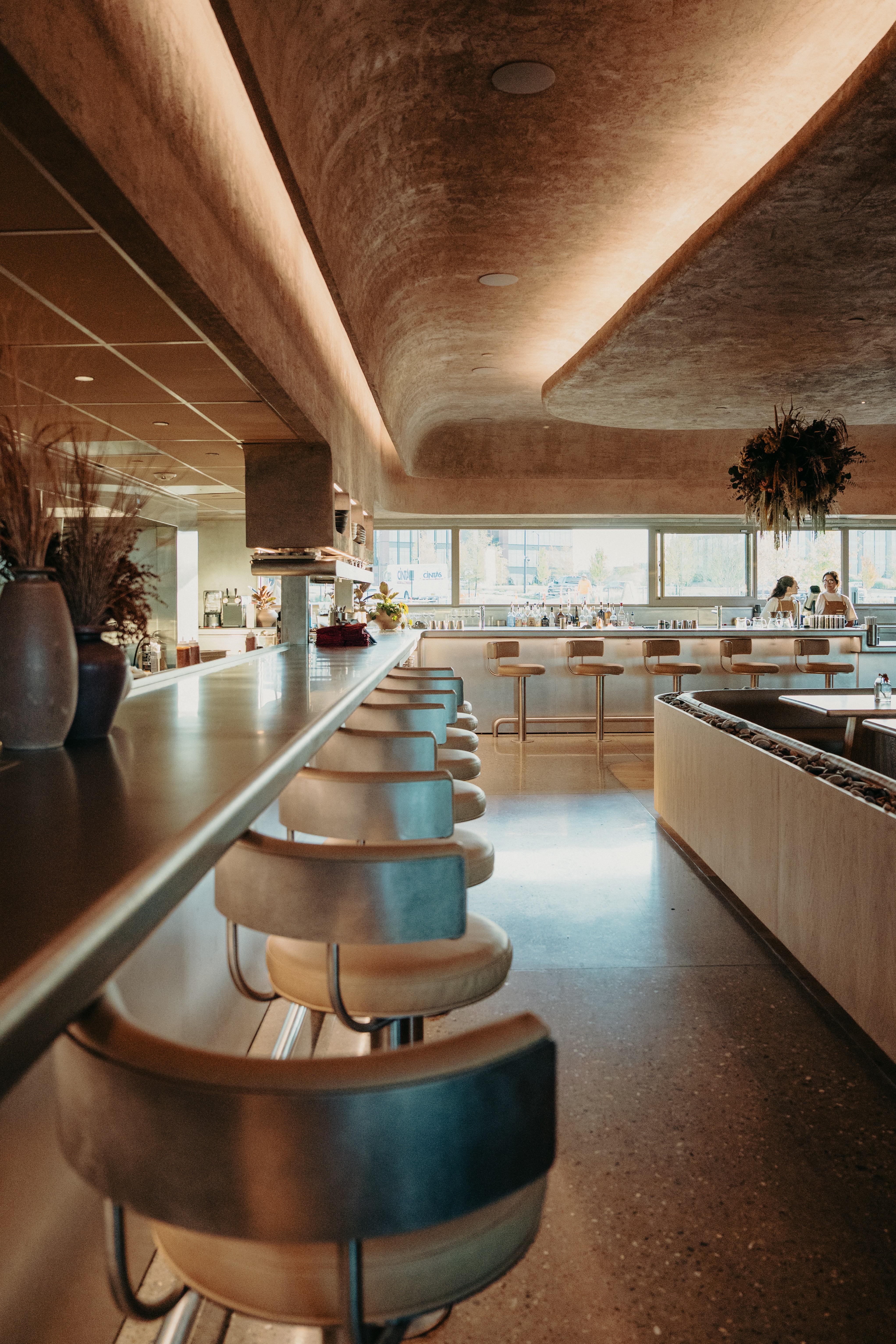
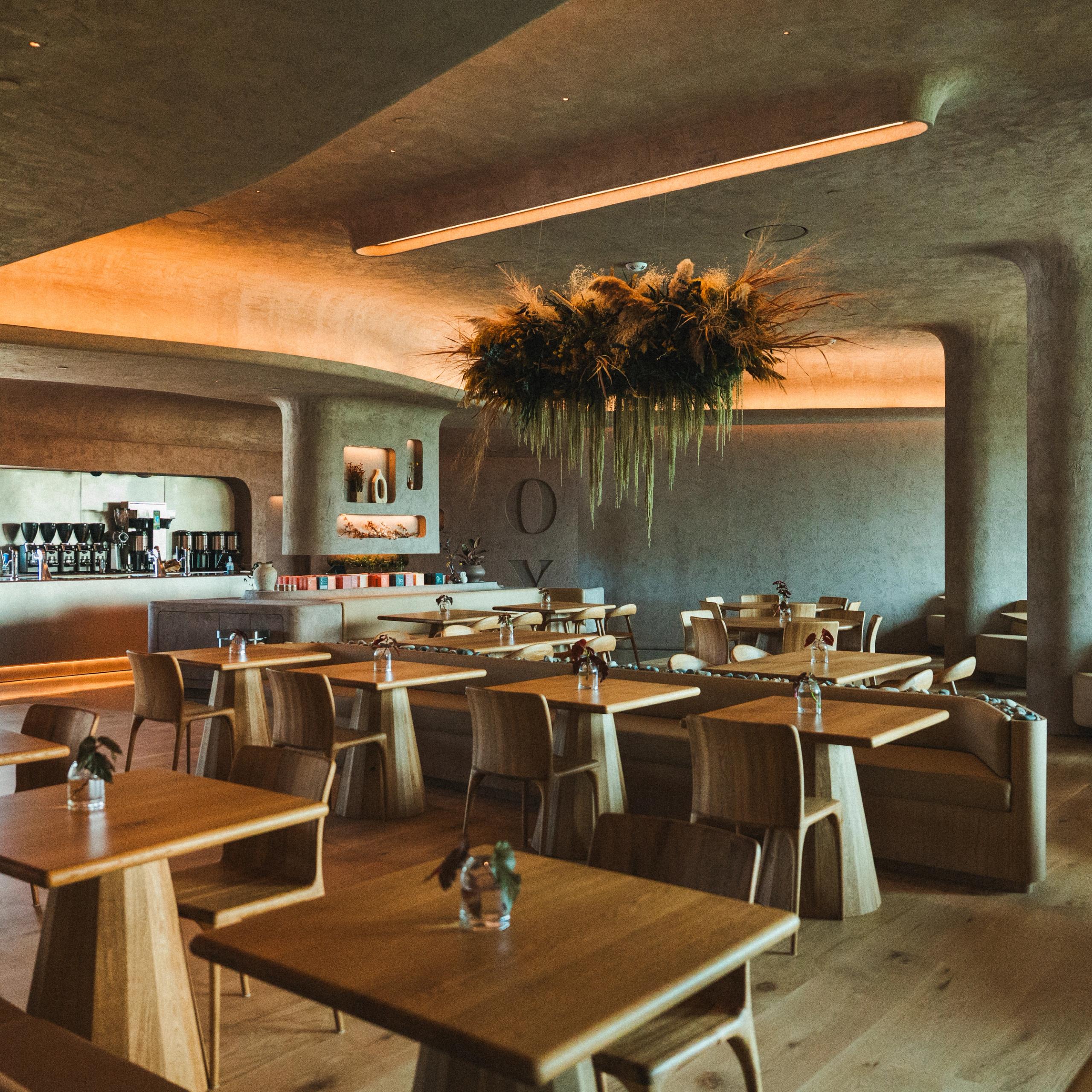
The material character of the room changes as much as the hospitality program does.
During the day, light brings out the texture in the plaster and limestone-rich surfaces. Later, the space becomes warmer and more intimate. The food and drinks program follows a similar rhythm, moving from coffee and breakfast towards dining, cocktails and wine.
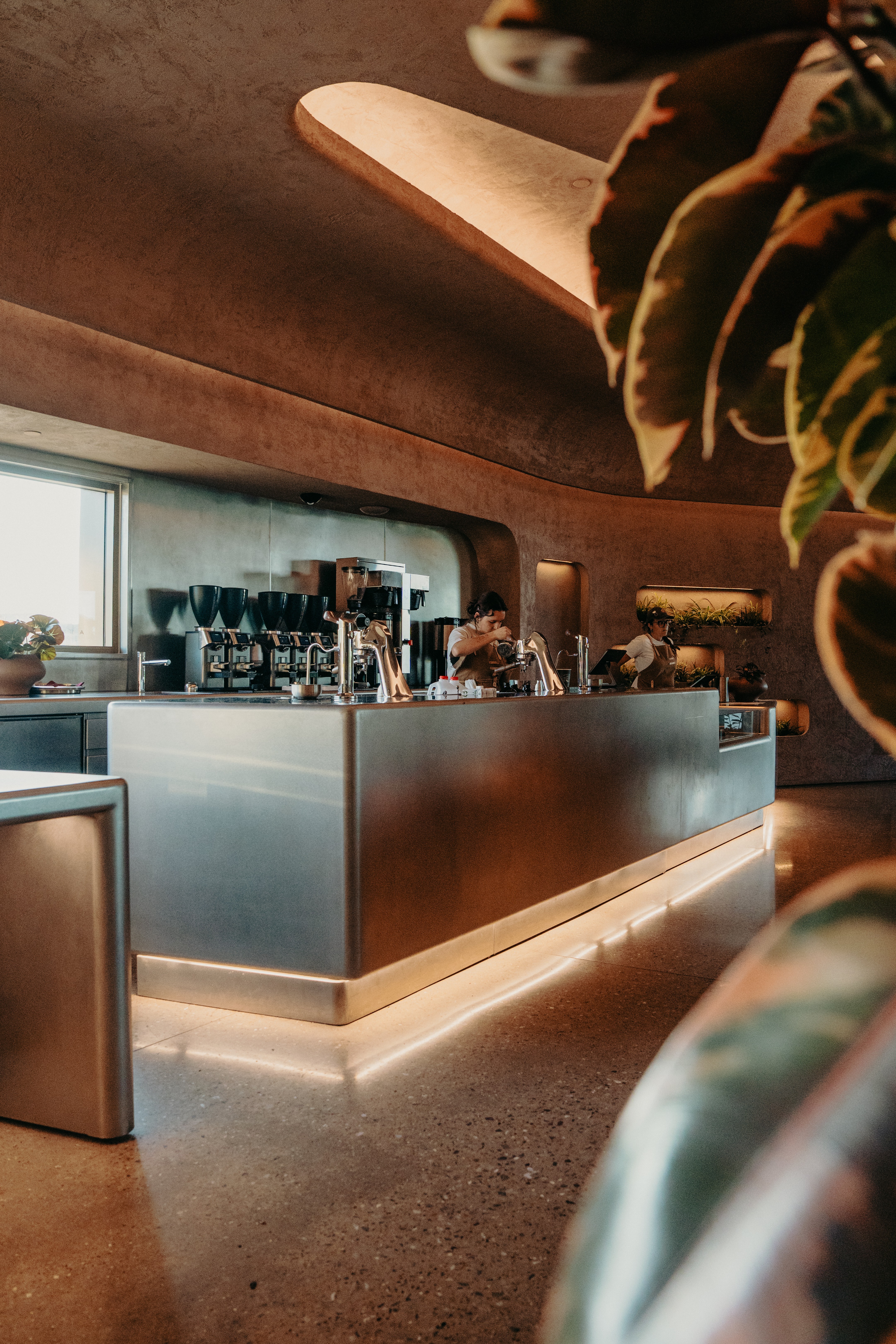
The stainless steel remains a constant through those shifts.
Its precision sits in contrast with the warmer materials around it, while the rounded edges and continuous surfaces connect it back to the architecture. It has a strong presence without needing to dominate the room.
More importantly, the same physical bar continues to support very different moments of service.
Different sections become more or less active. Wells change use. Coffee remains part of the operation while cocktails, wine and food take on a greater role. Guests arrive differently, stay for different lengths of time and interact with the bar in different ways.
That adaptability is really what sits behind the scale of the project.
There are plenty of individual details worth looking at, from the Modbar integration and Paloma stations to the changing wells and cyclist pickup window. But The Preserve makes the most sense when those elements are seen together.
Onyx created a venue where coffee sits within a much wider hospitality experience. Our role was to build the working environment around it, connecting the different parts of the day through one coherent bar system.
The result has a significant physical presence in the room, but its real value is in how much it allows the space, and the people working within it, to do.